
Home » Water Tank Installation Guide
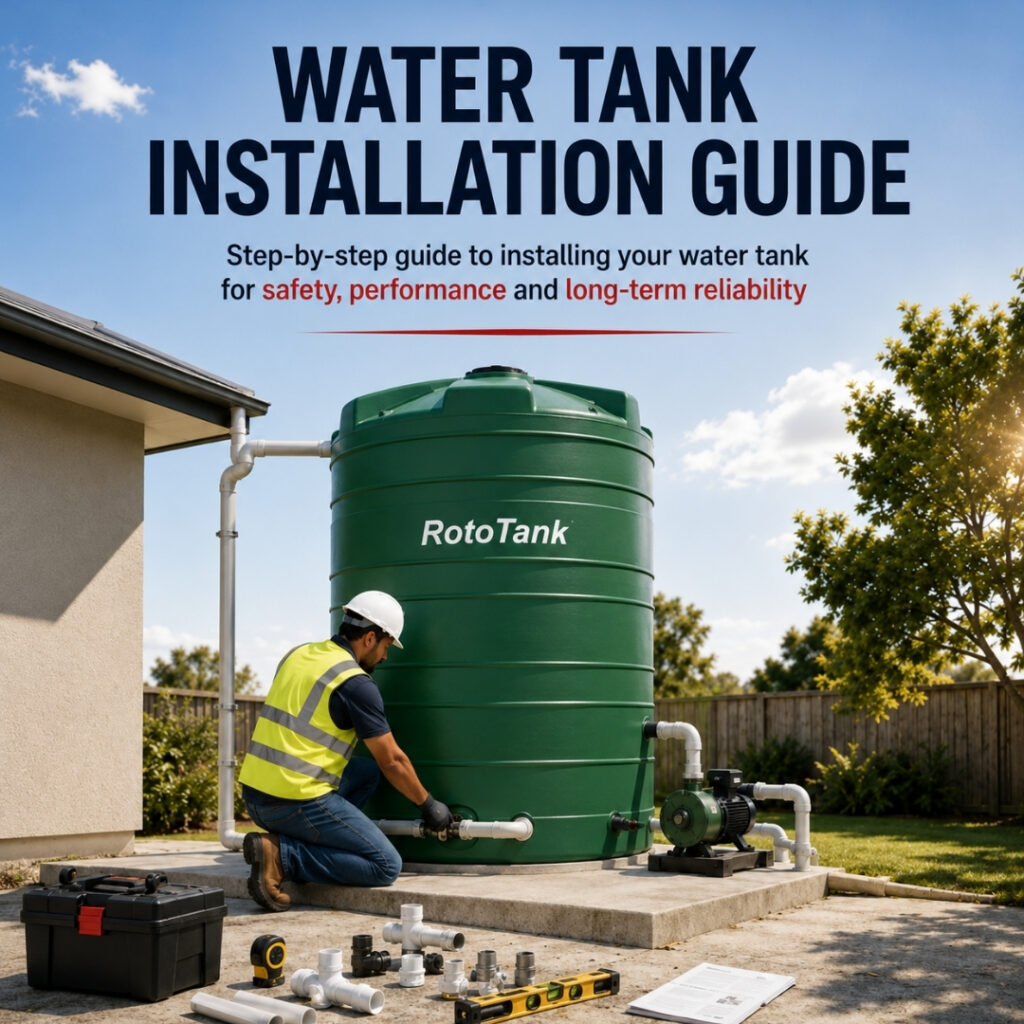
Step-by-step guide to installing your water tank correctly for safety, performance and long-term reliability.
Installing a water tank correctly is essential to ensure reliable water storage, maximise the lifespan of the tank and maintain the manufacturer’s warranty. Whether you are installing a tank for residential, agricultural, commercial or industrial use, proper planning and preparation are the key to long-term performance.
This guide explains each stage of the installation process, from selecting the correct location and preparing the base to connecting gutters, overflow systems, pumps and filtration. By following these best practices, you can protect your investment and ensure your water storage system operates safely and efficiently for many years.
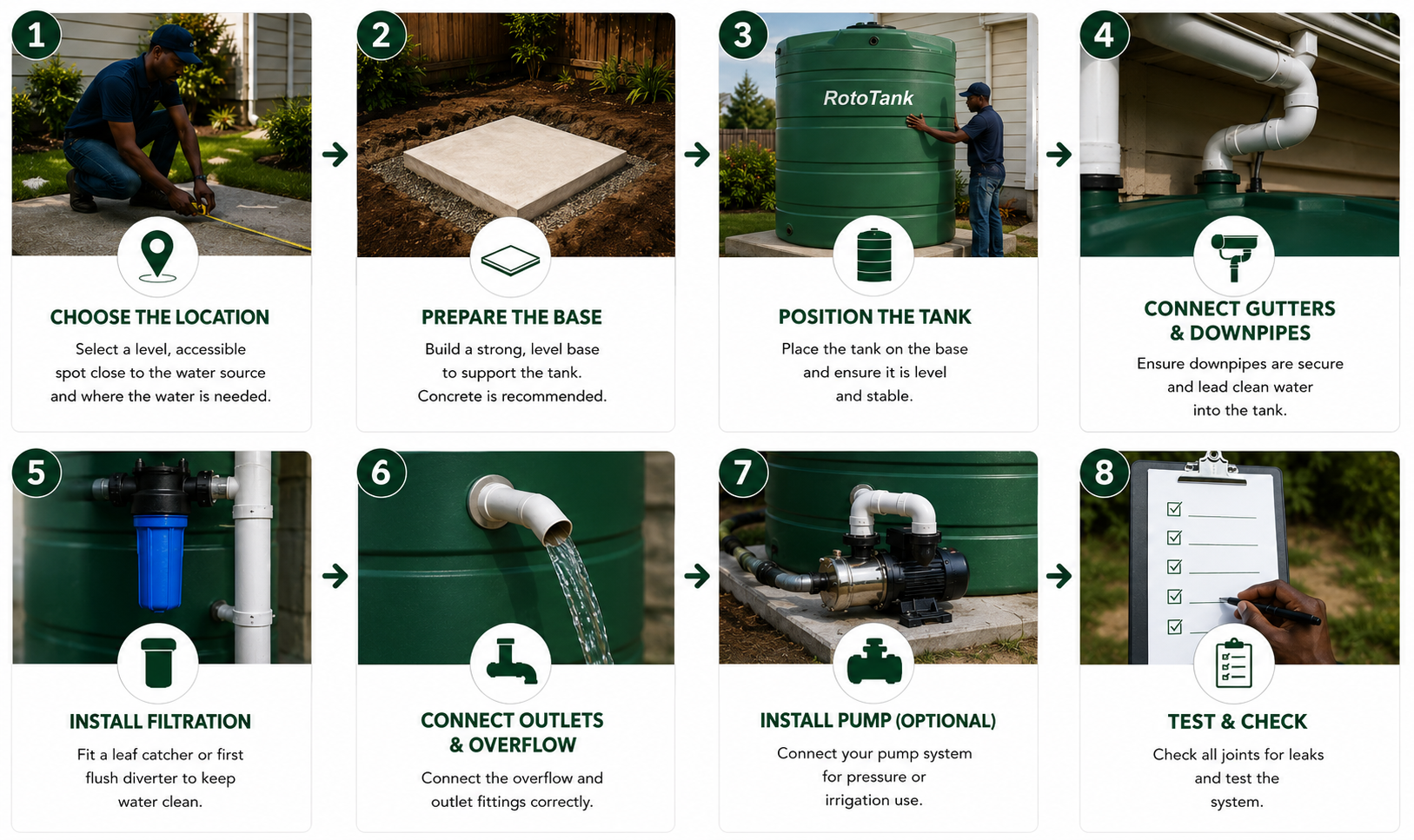
This guide covers every important aspect of water tank installation, including:
A reinforced concrete slab or a well-compacted crusher dust base that is perfectly level.
No. The tank should always be installed on a properly prepared foundation.
Larger tanks generally require reinforced concrete, while smaller tanks may be installed on a compacted approved base.
Yes, many residential tanks can be installed by homeowners, provided the manufacturer’s installation guidelines are followed.
The base should fully support the entire footprint of the tank.
Yes. A first flush diverter improves water quality by diverting the initial dirty roof runoff.
If the water will be used inside the home or for drinking, filtration is highly recommended.
Yes. Multiple tanks can be linked to increase storage capacity.
Keep the lid closed, prevent sunlight from entering the tank and clean gutters regularly.
Yes. Every water tank should have an overflow pipe sized appropriately for the inlet.
An uneven base can stress the tank and reduce its lifespan. It should be corrected immediately.
Yes. Regular inspections, cleaning and checking fittings help maximise performance.
Only after the site has been properly engineered to provide a level, stable foundation.
Typical installations use inlet fittings, outlet fittings, overflow fittings and valves.
Yes. Installation recommendations are available to help ensure correct setup and warranty compliance.
RotoTank supplies water storage solutions through branches across South Africa and online.